I wrote a note a while back on Norwegian ancestry [1], and in that note I show that about 14% of Norwegians have Thai mtDNA, whereas about 6% of Swedes have Thai mtDNA. The match threshold is in this case set to 99% of the full mtDNA genome, so this is not something that can be dismissed. Further, the Finns are even closer to the Thai, with about 18% of Finns again a 99% match to Thai mtDNA. Sweden is in the middle of Norway and Finland, so it’s a bit strange, since you can’t argue an East to West migration, unless the Swedes killed a lot of people that are related to the Thai, or simply didn’t reproduce with them.
I think instead we can make sense of all of this, by looking to the Sami, who are yet again even closer to the Thai, with about 30% of the Sami a 99% match to the Thai. The Sami are nomadic people that certainly extend further East than the Scandinavians, into Russia, and I think they are ultimately Asian people. If true, this would explain why the Finns are so close to the Thai, and then all you need is for the Swedes to generally avoid mating with the Finns, which is what sovereign boundaries generally accomplish. The fact that the Finns and Sami speak a totally different, Uralic language, whereas the Swedes and Norwegians speak Germanic languages, is consistent with this hypothesis.
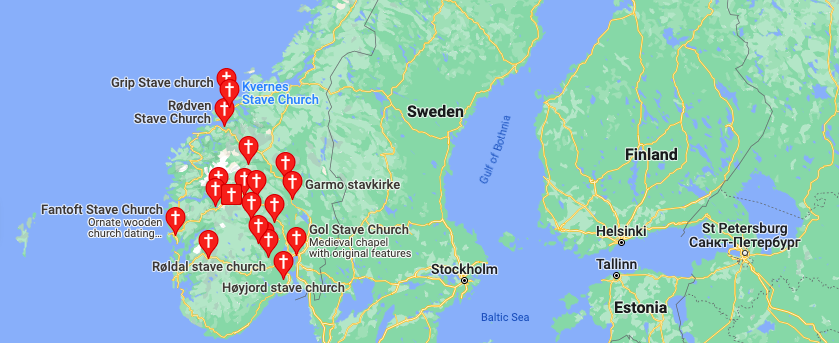
This still leaves the question of why the Norwegians are so close to the Thai. I previously noted in [1] that Norway, and not Sweden, has a large number of churches, that are plainly Asian in design, and Thai in particular. Below is (1 left) the distribution of Stave Churches, none of which are in Sweden, though they are elsewhere in Europe, (2 center) the Borgund Stave Church, and (3 right) the Sanctuary of Truth in Thailand.
The question is, why were these churches (all built around 800 years ago) only built in Norway, and not Sweden, and further, how on Earth did Thai mtDNA end up in Norway in such a large quantity?

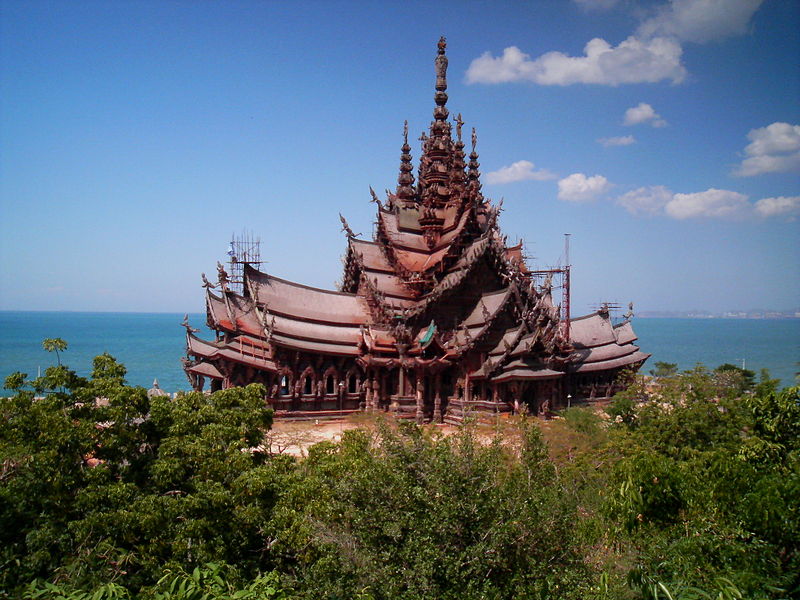
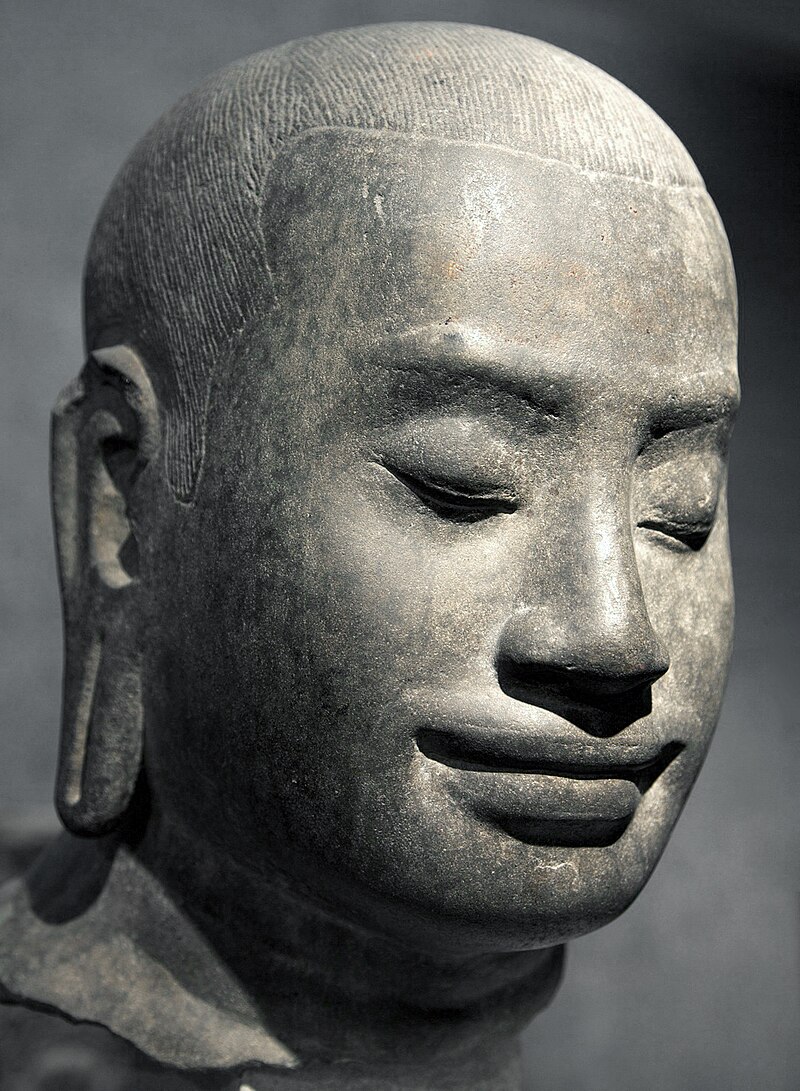
I think the answer is actually quite simple: Nordic people travelled to Thailand, which is consistent with the fact that the Vikings had Buddhist relics. Further, I can’t find a single Viking monument that is still standing, other than the Runic Stones, basically all of which are in Sweden. I think Nordic people, presumably the Vikings, travelled to what is now Thailand, and learned how to construct buildings that last, out of wood. This might sound backwards from the basically racist modern perspective, but the Khmer Empire e.g., constructed massive temples that are still standing to this day, and had very advanced skills in the fine arts generally. Below is (1 left) Angkor Wat and (2 right) is a bust of Jayavarman VII, both of which are plainly superior in quality to anything produced by the Vikings, by a simply enormous margin, except the Viking ships. Both of these were again produced about 800 years ago, the same age as the Stave Churches.

Despite having drastically superior building and artisan skills generally, it seems at least credible that the people of South East Asia, around the time of the Khmer Empire, didn’t have the best ships. That AP article says that the Khmer Empire ship in question was cut from a single tree trunk. That is nothing compared to the ships constructed by the Vikings, which were at their extremes, almost three times as large, and extremely complex structures. Below is (1 left) the Oseburg ship, built around 1,200 years ago, (2 right) a detail from the Oseburg ship, and (3 right) a detail from the Urnes Stave Church, which is plainly similar to the detail from the Oseburg ship (and neither look terribly Christian to me).

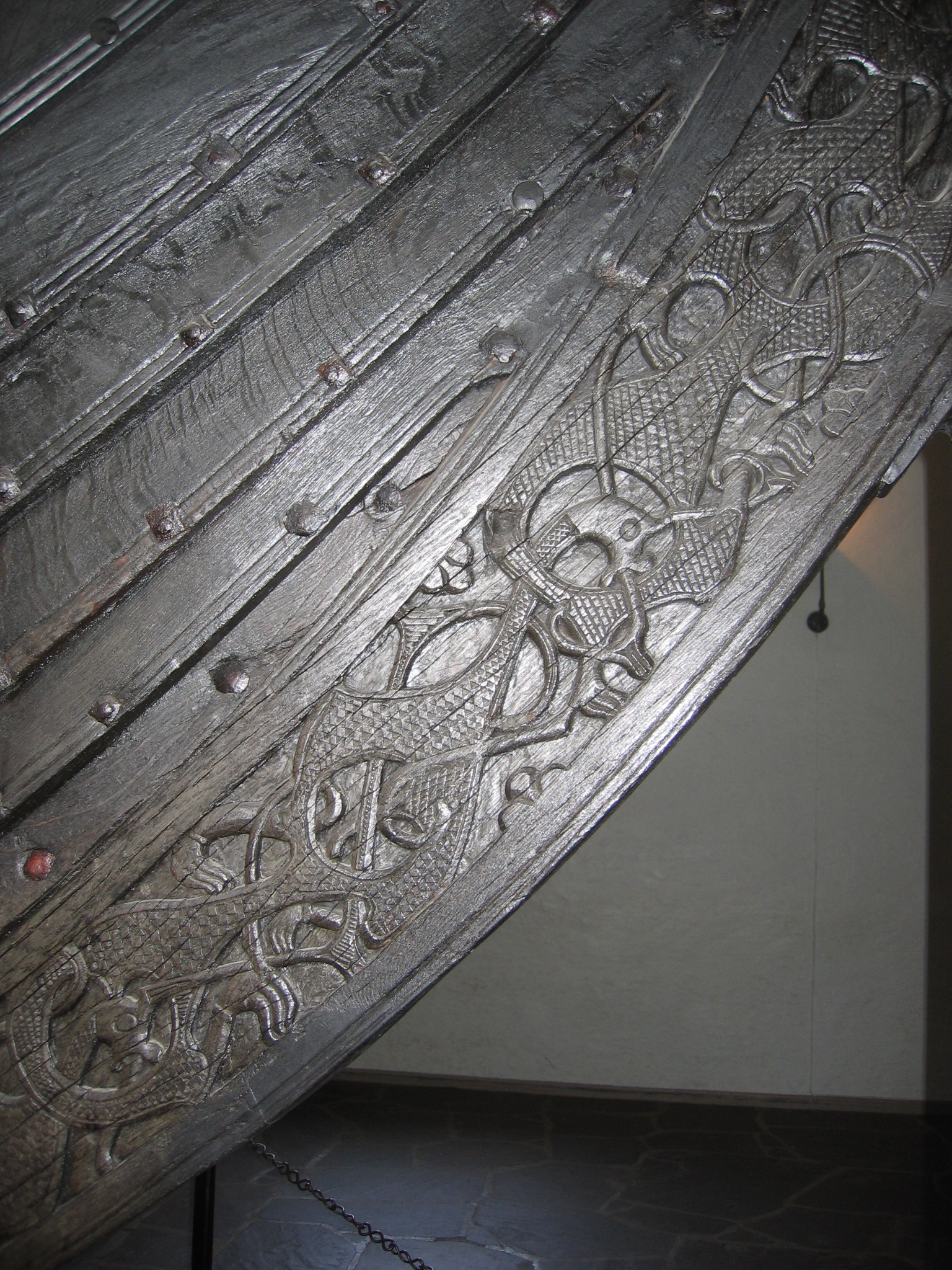
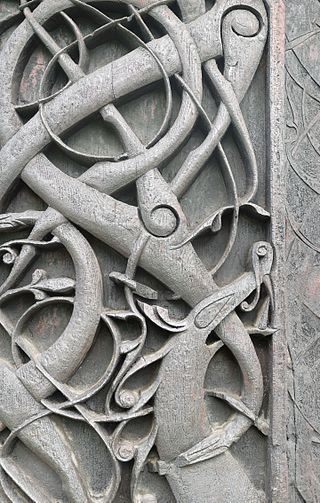
Again, the Khmer ship is from almost exactly the time these Stave Churches are believed to have been built, about 800 years ago. This suggests the possibility that a bargain was struck, where a people that knew how to construct large, durable buildings (i.e., the South East Asians), exchanged that knowledge, for the ability to build large durable ships, or simply bought them from the Nordic people. A really interesting possibility is that this led to the settlement of Hawaii, which would obviously require seriously advanced navigation skills. Hawaii was believed to be settled around the same time, roughly 800 years ago, but this is still not totally sorted (to my limited knowledge on the topic). If you look through my work on mtDNA generally, you’ll see that about 50% of the Thai are a 99% match to the Hawaiians, making this a not totally ridiculous hypothesis.
The bottom line is, the Vikings probably didn’t know how to construct large durable buildings, until either someone figured it out, or someone else taught them. At the same time, if this is true, they sailed all the way to South East Asia, which is an astonishing accomplishment. In the case of the Khmer, it seems plausible that what was plainly an incredibly advanced civilization, was still making use of primitive boats.
All of this cuts again the false notion of generalized skill, and advancement, that probably comes from the Renaissance, and was reinforced in modernity, where one country is simply “more advanced” than another. In contrast, it seems plausible that people traded in ideas, a very long time ago, becoming skilled at only particular things, and learning other skills over time from other civilizations, creating a much more complex portrait of what I suppose would be a balance of trade. This would be an early market for intellectual property, that of course makes sense, it’s just not typically expressed in these terms, because it’s history and not economics, but in this view, history is economics.
All that said, the Thai are not the Khmer, but it’s pretty close. Further, the fact that the Nordic peoples went from building (as far as I can find) literally nothing that is still standing, to building plainly Asian structures that are still standing, suggests some kind of technology transfer. My best guess is that in exchange for knowledge, or perhaps simply ships, the Nordic peoples learned about real architecture from people that lived around what is now Thailand and Cambodia, and kept the style. Now, if you did all of this, you probably wouldn’t want to share any of it, especially if you brought back women, men being who they are, in particular Viking men. This would make it perfectly sensible to seek a separate piece of land, and start what I think was a distinct Nordic culture, that eventually came to be what we know as Norway.
 Information Overload
